
THE ONE-MINUTE TAKEAWAY: A Will gives instructions after you pass away and names an executor, A Revocable Living Trust holds title to major assets (like your home) so a successor trustee can act without court if you die or become incapacitated.
THE ONE-MINUTE TAKEAWAY
• A Will gives instructions after you pass and names an executor (and guardians for minors).
• A Revocable Living Trust holds title to major assets (like your home) so a successor trustee can act without court if you die or become incapacitated—but only if you fund it (retitle the home into the trust).
• Most families benefit from both: the Trust handles the heavy lifting for real estate and key accounts; the Will is the safety net and personal-instructions tool.
• Add POA + Health Care Directive so trusted people can help during life if you can’t act yourself.
WHAT A WILL DOES
• Says who gets what after you pass; names an executor to carry it out.
• Can name guardians for minor children or dependents.
• Usually goes through probate (court process that takes time, can cost money, and is public).
Good for: personal instructions, keepsakes, guardians, and as a backup for anything not already in your Trust.
WHAT A REVOCABLE LIVING TRUST DOES
• You create the Trust and remain in control as trustee during your life.
• You title your home and key accounts into the Trust (this step is called “funding”).
• If you pass away or become incapacitated, your successor trustee manages or transfers assets without court, per the trust.
• It’s private and usually faster than probate—especially helpful for real estate.
Good for: your home and other significant assets you want to transfer smoothly and privately.
WHY YOU GENERALLY NEED BOTH
Think as if it’s a toolbox:
• The Trust = the power tool that keeps big assets out of court and allows management during incapacity.
• The Will = the multi-tool that covers guardianship and acts as a pour-over to catch anything you forgot to title into the Trust.
Bottom line: The Trust moves real estate and major assets privately and efficiently; the Will fills gaps and handles instructions the Trust doesn’t (like guardianship).
DON’T FORGET POA & HEALTH CARE DOCS (THE “DURING LIFE” ESSENTIALS)
• Durable Power of Attorney (Financial POA): Lets a trusted person handle money/legal tasks you can’t—sign checks, talk to banks/insurers, manage assets not in your trust (e.g., retirement accounts), file taxes. Can be immediate or springing (effective upon incapacity). It complements the trust: your successor trustee manages trust assets; your POA can act for non-trust matters.
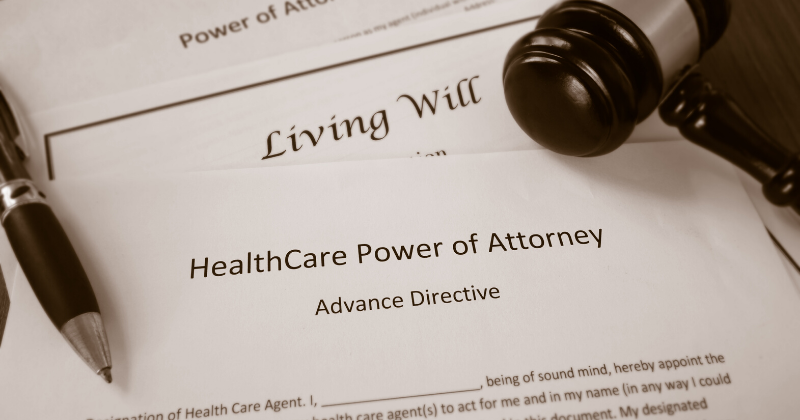
• Advance Health Care Directive (AHCD) + HIPAA Release: Names your health-care agent and gives guidance on treatment preferences; HIPAA lets providers share information with your agent. This avoids delays and keeps decisions aligned with your wishes.
Bottom line: Trust = manages big assets & avoids probate. Will = safety net & guardianship. POA/AHCD = empowers trusted people to help you during life if you can’t act yourself.
COMMON MYTHS (AND THE TRUTH)
• “I made a Trust—I’m done.” Not quite. You must fund it (retitle the home and designated assets into the Trust).
• “A Will keeps me out of probate.” A Will gives instructions to probate—it doesn’t avoid it.
• “Trusts are only for the wealthy.” Trusts are extremely helpful for homeowners who want privacy and efficiency.
HOW THESE TOOLS WORK TOGETHER (AT A GLANCE)
• Will: public, probate-based, names guardians, catches assets not titled to the trust (pour-over).
• Revocable Living Trust: private, avoids probate for assets inside it, enables management during incapacity.
• POA/AHCD: empower trusted agents to act for finances and health during life if you’re unable.
QUICK HOMEOWNER CHECKLIST (5 MINUTES)
□ Do I have both a Will and a Revocable Living Trust?
□ Is my home actually titled in the Trust? (Ask title to confirm current vesting.)
□ Who is my successor trustee and executor? Do they know where documents are?
□ Do I have a Durable Financial POA and an Advance Health Care Directive + HIPAA release?
□ After big life events (move, marriage/divorce, new property), did I review and update the plan?
IF YOU’RE THE ADULT CHILD HELPING A PARENT
• Ask gently where documents live and who the successor trustee/executor and POA/AHCD agents are.
• Offer to check how title is held today (I can pull the current deed).
• If there’s a Trust, confirm the home is deeded into it—that’s the #1 missed step.
WHY THIS MATTERS FOR REAL ESTATE (MY WORLD)
When a homeowner passes away, a Trust lets the successor trustee list and sell the property without waiting for court. That means less time, cost, and stress for the family—and a cleaner, more predictable timeline to closing.
FRIENDLY NOTE
This is general information, not legal or tax advice. I’m happy to coordinate with your attorney and title company to get everything aligned quickly and correctly. Need an attorney referral to create or update your will and trust? Contact me today for introductions to a trusted estate-planning attorney.